
Who takes a crypto bet in New Zealand, and what changes when one does
 Available in US
The honest answer to a search for crypto betting in New Zealand runs in two sentences, and neither one has anything to do with a wallet address. Since 28 June 2025 only TAB NZ and its sister brand Betcha may lawfully offer racing and sports betting to people in New Zealand, and TAB NZ does not accept crypto. The offshore crypto bookmakers that turn up when a New Zealander searches “crypto betting” sit outside that monopoly, target New Zealand customers anyway, and trade on licences that give them no right to do so.
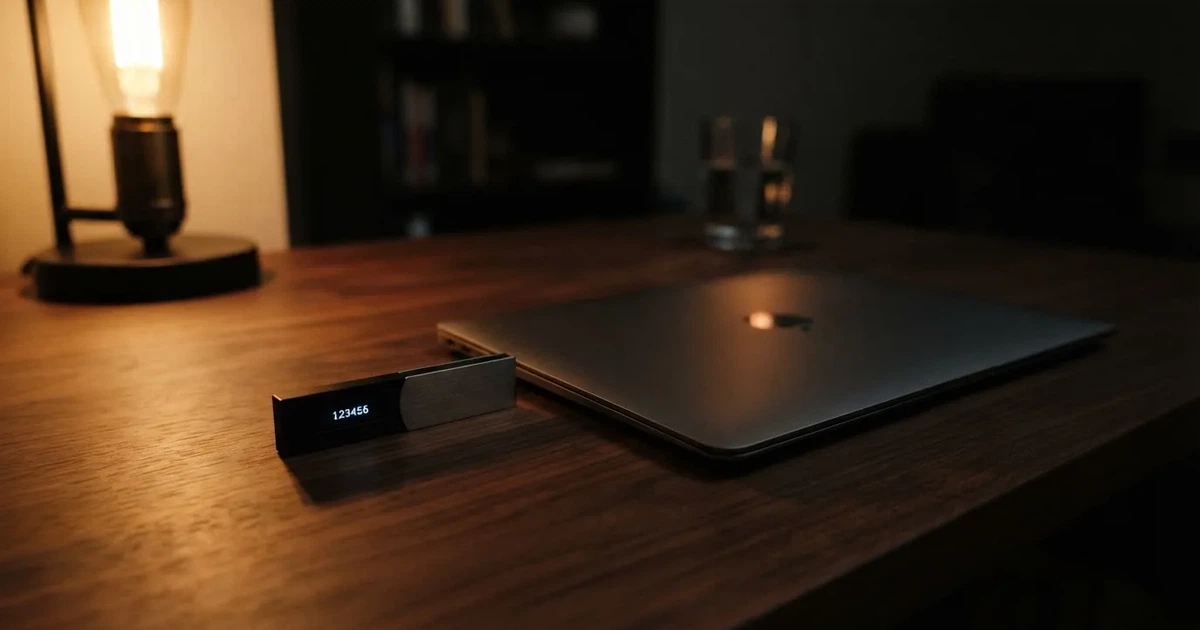
That is the choice the rest of this page unpacks. There is a lawful path that costs the punter a small set of conveniences. There is an offshore path that buys back those conveniences at the cost of every protection New Zealand offers. Both paths exist in 2026; only one of them is offered to you by a New Zealand company under a New Zealand statute.
Currency stamp: current as of 30 October 2026, verified against the Department of Internal Affairs register and TAB NZ’s published terms.
Table of Contents
- The shortlist of crypto-friendly bookmakers a New Zealander actually meets
- What a New Zealand punter is actually choosing between
- How the law treats a New Zealand punter who bets offshore
- What responsible gambling looks like inside and outside the monopoly
- The blockchain premise the offshore shelf is built on
- What the two shelves cost in tax and in compliance
- The two TAB NZ brands, side by side
- The offshore brands in more detail
- The stakes for the small-budget punter
- What the page does not promise
- Frequently asked questions about crypto betting in New Zealand
The shortlist of crypto-friendly bookmakers a New Zealander actually meets
A reader looking for crypto betting in New Zealand in 2026 is, in practice, choosing between two very different shelves. The first shelf has two brands and they are owned by the same group. The second shelf has at least five offshore brands, none of them licensed here, all of them accepting Bitcoin or other coins, and each one describing itself with the same vocabulary. The shortlist below pairs the two shelves so the choice is visible at a glance.

How the two shelves compare on the questions that matter
The table below sits between a New Zealand reader and the choice they have to make. The first column names what is being compared. The second says whether the brand is one of the two TAB NZ brands or is unlicensed in New Zealand. The third reports, in the operator’s own words where research found one, what its terms say on the page’s subject: how money moves in and out, and how the brand is licensed outside New Zealand.
| Brand | New Zealand status | What the operator’s terms state on the key’s subject |
|---|---|---|
| TAB | TAB NZ brand | TAB NZ takes bets in New Zealand dollars through its app, fixed-odds and tote products only; no crypto deposit route is listed. Licensed under the Racing Industry Act 2020. |
| Betcha | TAB NZ brand | Betcha is the second online brand of TAB NZ; deposits and withdrawals run through TAB NZ’s banking rails. No crypto deposit route is listed. Licensed under the Racing Industry Act 2020. |
| Telbet | Not licensed in New Zealand | A “crypto casino and sportsbook” branding; a stated welcome package of 200% up to 1 BTC plus 50 free spins and a 5 USDT free bet on its Russian-language mirror. No New Zealand licence disclosed. |
| Winz.io | Not licensed in New Zealand | Holds an Anjouan and Tobique licence in its own footer; no New Zealand licence; deposits and withdrawals priced in crypto. |
| Rooster.bet | Not licensed in New Zealand | Operated by Novatrix SRL in Costa Rica under Tobique e-gaming licence No. 0000002; no New Zealand licence; crypto-only banking. |
| Thunderpick | Not licensed in New Zealand | Operated by Paloma Media B.V. in Curaçao under licence OGL/2024/677/0722; no New Zealand licence; crypto deposits accepted. |
| Roobet | Not licensed in New Zealand | Operated by Raw Entertainment B.V. in Curaçao under licence OGL/2024/687/0427; no New Zealand licence; crypto deposits accepted. |
The New Zealand column carries a weight the offshore column cannot match. TAB and Betcha are the only brands where the law says a New Zealand punter’s bet is recognised as lawful. The offshore brands operate on the same kind of licence the offshore gambling market has run on for years, and none of those licences gives the holder any standing in New Zealand. That difference, and not the deposit method, is what a reader is choosing between.

The single most useful reading of the shortlist
A reader who only wants a crypto deposit will go to the offshore shelf without thinking. A reader who understands that “licensed in Curaçao” means licensed to operate a Curaçao-facing business will read the table above differently. The four Curaçao, Anjouan and Tobique licences listed here were issued by jurisdictions that do not require the holder to identify a New Zealand customer, do not put a New Zealand player on a local complaints register, and do not require the operator to honour a self-exclusion request made under New Zealand law. The licence is real. The protection it offers a New Zealand punter is not.
That is the comparison a shortlist is supposed to make, and it is the comparison the table above makes. The two New Zealand rows match; the five offshore rows match each other; the two groups do not match each other. Everything else on this page is a longer way of saying that.
What a New Zealand punter is actually choosing between
The two shelves exist because of one statute. The Racing Industry Amendment Act 2025 inserted section 74AAA into the Racing Industry Act 2020, and the section took effect on 28 June 2025. No person other than TAB NZ may offer racing betting, sports betting or other racing or sports betting to a person in New Zealand, regardless of where that person is resident or incorporated. The Department of Internal Affairs told providers serving New Zealand to withdraw with immediate effect.
The monopoly, in plain terms
TAB NZ runs two online brands — TAB and Betcha — and both brands are operated under a 25-year partnership with Entain signed in 2023. The partnership gives Entain a 50/50 share of gross profits, with at least $150m a year going to TAB NZ for the first five years, and a one-off $100m payment from Entain to the racing sector. The two brands are not competitors. They are two front doors on the same operator, and the operator is the only one a New Zealand punter can lawfully bet with.
The law does not block offshore websites. It puts the liability on the offshore operator. There is no licensing route for a second New Zealand bookmaker and no licence register, because the register has only one entry. New Zealand punters who reach an offshore site are reaching a business the Department of Internal Affairs says is breaking New Zealand law by serving them; the risk is entirely the punter’s own to manage.
What “not licensed in New Zealand” actually means
Five of the seven brands in the table sit in the offshore shelf. Each one names a foreign licence in its own terms — Anjouan, Tobique, Curaçao — and each of those licences does a real job in the country that issued it. None of them does the job of a New Zealand licence, because New Zealand does not issue one to offshore bookmakers. A reader who treats the licence line as a quality stamp is reading it correctly for the country of issue, and reading it wrongly for New Zealand.
The Department of Internal Affairs has warned that overseas operators may sit in jurisdictions with minimal consumer safeguards, may not return unspent credits and may not pay out large wins. None of that is a finding against any particular brand; it is the regulator’s framing of what a New Zealand punter is reaching into when a New Zealand licence is absent.
What an offshore bet does not get a New Zealand punter
A punter who bets with TAB or Betcha sits inside a harm-minimisation framework the operator is required to run. Deposit limits, time-outs and self-exclusion are listed inside the app, and an exclusion applies across both brands. Help sits inside the same system: the free Gambling Helpline on 0800 654 655, a text line on 8006, and Safer Gambling Aotearoa. The TAB NZ operator is audited, pays a Problem Gambling Levy of 0.74% in force from 1 July 2025 to 30 June 2028, and answers to a regulator that can fine or revoke it.
A punter who bets offshore gets the deposit method they came for, and the rest of that stack disappears. There is no New Zealand complaints body that can order an offshore operator to pay a disputed winning. A self-exclusion request sent to an offshore support inbox is honoured at the operator’s discretion, and an exclusion made under New Zealand harm-minimisation law has no reach into a Curaçao company. The deposit that an offshore site will accept in seconds is the same deposit that a New Zealand dispute resolution body will not be able to help recover. That is the trade, and it is the trade every offshore bettor in New Zealand is making.
How the law treats a New Zealand punter who bets offshore
The law targets the operator. Section 19(4) of the Gambling Act 2003, inserted in 2025, says an individual may not be convicted for placing a bet with an offshore betting operator in breach of section 74AAA. No source states a penalty for a player. The honest framing of that asymmetry is the one used by regulators: the offshore operator is breaking New Zealand law by serving the punter, while the punter faces no such penalty for placing the bet.
What that framing does
A reader who hears “not licensed in New Zealand” sometimes reads it as “illegal for me”. The two are not the same. The law is on the operator’s side, not the punter’s side. The punter’s exposure is the loss of the New Zealand protection stack described in the section above: no regulator to complain to, no harm-minimisation framework to fall back on, no guarantee that an unspent balance is returned. That is a real exposure. It is not the same exposure as criminal liability.
A reader who hears “crypto-friendly” sometimes reads it as a quality mark. It is not. “Crypto-friendly” describes a deposit rail. The licensing question, the protection question and the dispute question sit beside it and are decided separately. A punter who treats the deposit rail as a proxy for safety is reading the wrong column of the comparison.
Changes in the betting landscape for 2026
Three changes land on this page in 2026 and the punter’s calculation shifts with each one.
The Racing Industry Amendment Act 2025 is the most recent, having taken effect on 28 June 2025, and it is the change that closed the offshore shelf to lawful operation. The second change is the closure of greyhound racing in stages from 1 August 2026, which means offshore brands may not take bets on greyhound races from that date either — the greyhound shelf goes dark along with the rest of the offshore betting proposition. The third change is the Online Casino Gambling Act 2026, which licenses online casino gambling only and does not extend the betting monopoly. TAB New Zealand winning the right to apply for a casino licence under the new law does not open the door to a second sports bookmaker.
A point-of-consumption charge on offshore racing and sports bets ceased on 30 June 2026. A punter reading older guides will meet that line and wonder whether the offshore shelf has reopened. It has not. The duty was an operator-side tax; its removal does not unmake section 74AAA.
What responsible gambling looks like inside and outside the monopoly
The harm-minimisation stack inside TAB NZ is the benchmark a New Zealand reader can compare against. Anything less is a step down. Anything absent is a step further down.
What TAB NZ provides inside its app
Deposit limits, time-outs and self-exclusion are listed in the TAB NZ app, and an exclusion applies across both TAB and Betcha brands. The TAB NZ app also lists the free Gambling Helpline on 0800 654 655 and the text line on 8006, and points to Safer Gambling Aotearoa as a referral route. The operator must maintain compliance with the betting prohibition under section 92A, and this obligation is supported by the Problem Gambling Levy framework managed by national authorities.
What an offshore operator provides, when it provides anything
Some offshore operators offer in-site deposit limits and self-exclusion tools. They are not bound by New Zealand harm-minimisation law and they are not bound by the New Zealand advertising code. The exclusion a punter requests from an offshore operator is honoured at that operator’s discretion, and the punter has no New Zealand body to complain to if the request is ignored. A punter who wants a New Zealand-recognised exclusion needs to bet through TAB NZ or to use the casino-register exclusion that the Online Casino Gambling Act 2026 will set up — and that register covers online casinos only, not sports betting.
Age and identity at TAB NZ
TAB NZ accounts require a verified New Zealand address and ID, and the minimum age for betting is 18. Betting under 18 is an offence under section 89 of the Racing Industry Act 2020. Land-based casinos run at age 20 — a separate regime with its own minimum, never merged with the betting minimum. The identity check is what underwrites the harm-minimisation stack: a self-exclusion only works if the operator can recognise the punter on the next visit, and the operator can only do that if it has verified the identity in the first place. The crypto deposit rail that offshore sites offer as a marketing line is, in the same breath, a rail that does not require a verified New Zealand address — which is why the offshore shelf cannot offer the protection stack the New Zealand shelf is required to.
The blockchain premise the offshore shelf is built on
The crypto bookmaker pitch rests on a small number of background facts about the technology itself. A reader who has not met those facts before will read the offshore brands’ marketing with one set of expectations; a reader who has met them will read it with another.
What the Bitcoin ledger is and is not
Bitcoin’s genesis block was mined on 3 January 2009 by its pseudonymous creator, Satoshi Nakamoto, whose real identity remains unknown. The protocol caps total issuance at 21 million coins, with the final fraction expected to be mined around the year 2140. The ledger is secured through proof-of-work, in which miners compete to find a block hash below a network-set difficulty target. Those four facts are the foundation a crypto bookmaker’s deposit page rests on, and they are also the limit of what the technology gives the punter.
The ledger is public and the addresses on it are pseudonymous. A pseudonym is not anonymity. Once an address is linked to a person — by an exchange that ran know-your-customer checks, by a chain-analysis firm, by a careless social-media post — every past and future transaction on that address is associated with that person. The offshore crypto bookmaker pitch describes the pseudonymity as if it were anonymity, and the description is the marketing line. The reality is what chain-analysis firms and the courts have already settled.
What a regulator does to a cryptoasset business
The UK regime is the clearest worked example. The FCA became the anti-money-laundering supervisor of UK cryptoasset businesses on 10 January 2020, under the amended Money Laundering, Terrorist Financing and Transfer of Funds Regulations 2017. The regulator is opening applications for authorisation of cryptoasset firms under a new FSMA-based regime on 30 September 2026, with the regime due to start on 25 October 2027. HMRC treats disposal of cryptoassets by individuals, including selling, swapping for another token or spending them on goods or services, as a chargeable event for Capital Gains Tax, in guidance first published on 19 December 2018.
The direction of travel is toward more identification, not less. A New Zealand punter who reaches an offshore crypto bookmaker through a wallet they have not linked to their identity is reading the regulator’s direction of travel as if it had not happened. The pseudonymity the offshore shelf relies on is the pseudonymity that every regulator in the major economies is in the process of unmasking. A reader who plans to keep betting through the same wallet five years from now is making a longer bet than the bookmaker’s licence.
What the ledger does to a disputed winning
A dispute with an offshore bookmaker is decided by the operator’s terms, in the operator’s jurisdiction, against an enforcement framework the punter does not sit inside. A Bitcoin transaction is not reversible. A bank chargeback is not available, because there is no bank in the loop. The escrow agents that crypto markets use for peer-to-peer trades do not exist on a bookmaker’s deposit page. A punter who has been underpaid by an offshore operator and has not already cashed out into a non-custodial wallet has, in practical terms, no recourse. The offshore shelf’s deposit rail is the same rail that takes the recourse away.
What the two shelves cost in tax and in compliance
A New Zealand punter who wins a recreational bet does not, in general, owe tax on it. Inland Revenue guidance says recreational gambling winnings are generally not taxable, and prize money from TAB horse, dog and trotting races is not taxable. A punter who bets as a business is a different case. None of this is tax advice, and the right answer for a punter whose betting looks like a business is Inland Revenue or an accountant.
What the player pays on either shelf
The tax treatment of recreational betting winnings does not change between the two shelves. A winning on TAB and a winning on an offshore crypto bookmaker are both recreational winnings in the eyes of Inland Revenue, and the same treatment applies. The capital-gains treatment the HMRC guidance describes is for disposal of the cryptoasset itself — selling, swapping, spending — and is a separate calculation the punter runs when they move crypto out of a wallet, not when they win a bet.
The player’s exposure on either shelf is the disposal side of the crypto coin, not the winning side. A punter who deposits Bitcoin, wins in Bitcoin, withdraws in Bitcoin and holds the Bitcoin has not disposed. A punter who converts the winnings to New Zealand dollars has disposed, and the capital-gains calculation applies at that point.
What the operator pays, and what that does not mean
TAB NZ pays the Problem Gambling Levy of 0.74% under section 92A of the Racing Industry Act 2020, in force from 1 July 2025 to 30 June 2028. Offshore operators supplying New Zealand residents pay online gambling duty — 12% of profits since 1 July 2024, rising to 16% from 1 January 2027. The duty being payable does not make the offer lawful. A punter who reads an offshore operator’s tax payment as a sign of legitimacy is reading it correctly for the Treasury’s books and incorrectly for the Gambling Act. The Department of Internal Affairs, not the tax ledger, decides who may offer betting in New Zealand.
The two TAB NZ brands, side by side
TAB and Betcha are the same operator. Both brands are run under the same 25-year partnership with Entain, both brands fall under section 74AAA of the Racing Industry Act 2020, and both brands share the same harm-minimisation tools and the same identity check. The two brands are not rivals on this page and the rest of this section does not pretend they are.
What TAB offers that Betcha does not, and vice versa
TAB is the older brand, the one with the retail footprint in pubs and clubs and the one whose app ships with Trackside live race streaming, in-app betting on the streamed races, racing form, Blackbook, Jockey Challenge and the simplified wallet for deposits and withdrawals. Betcha is the newer online sister brand, built around the same racing and sports markets but with a faster mobile interface aimed at the online-only punter. A punter who already has a TAB account has a Betcha account in the same group, and a self-exclusion that runs on one brand runs on the other.
The two brands’ offers are described in their own terms. Promo codes do not appear on this page. A punter who wants the welcome terms reads them on the operator’s own site before staking anything, because welcome terms change, are tied to specific payment methods, and carry a turnover requirement that the operator — not the page — sets.
What neither TAB NZ brand offers, and why that matters here
Neither TAB nor Betcha accepts crypto. The deposit methods on both brands are the operator-level payment set listed in TAB NZ’s terms, and the deposit limits on both brands are the operator-level limits the same terms set. A punter whose reason for landing on this page is the crypto deposit method has already learned, by reading this far, that the lawful shelf has no crypto option to offer. The next section is for that punter.
The offshore brands in more detail
The five offshore brands in the table above are listed for reference because New Zealand players meet them. The descriptions below are what each operator’s own terms state, and nothing in them is a recommendation. Each brand is marked “not licensed in New Zealand” because section 74AAA says no person other than TAB NZ may offer sports or racing betting to a person in New Zealand, regardless of where the operator is incorporated.
Telbet
Telbet describes itself as a crypto casino and sportsbook, with a stated welcome package of 200% up to 1 BTC plus 50 free spins and a 5 USDT free bet on its Russian-language site. The terms do not list New Zealand among the excluded jurisdictions, and the brand names no licence that applies in New Zealand. A New Zealand punter reading those terms is reading a business the Department of Internal Affairs says is breaking New Zealand law by serving them; the operator operates without a New Zealand-recognised legal basis. The welcome offer is the kind of offer a punter is advised to weigh against the wagering multiple the operator sets, the minimum price the operator sets, and the deadline the operator sets — none of which the marketing page usually states in plain numbers.
The brand is on the shortlist because New Zealand players meet it. It is not on the shortlist because the operator’s terms invite New Zealand players. The “Telbet” brand sits on the offshore shelf because that is the shelf it sits on, and the shelf does not move.
Winz.io
Winz.io states in its footer that it holds an Anjouan and Tobique licence. Anjouan is the Autonomous Island of Anjouan in the Union of the Comoros, and Tobique is the Tobique Gaming Commission. Both are real licensing regimes in their own jurisdictions. Neither regime is supervised by the Department of Internal Affairs, neither is bound by section 74AAA, and neither gives the holder a right to take bets from people in New Zealand. This brand lacks a New Zealand licence because it does not qualify for one.
Rooster.bet
Rooster.bet is operated by Novatrix SRL, a company incorporated in Costa Rica under registration number 3-102-893958, holding Tobique e-gaming licence No. 0000002. The licence line is real and the corporate entity is registered. The Costa Rica registration is not, on its own, a right to take bets from a person in New Zealand. It is an offshore entity operating without local sanction.
Thunderpick
Thunderpick.io is owned and operated by Paloma Media B.V., a Curaçao company with company number 146988, licensed by the Curaçao Gaming Authority under licence number OGL/2024/677/0722. The Curaçao regime supervises Curaçao-facing operations and is recognised in jurisdictions that have chosen to recognise it. New Zealand has not chosen to recognise it as a route into New Zealand betting. The brand operates entirely outside the New Zealand gambling framework.
Roobet
Roobet.com is a brand name of Raw Entertainment B.V., registration number 157205, Korporaalweg 10, Curacao, licensed under Curaçao licence OGL/2024/687/0427. The same reading applies: the licence is real in Curaçao and is not a right to take bets from people in New Zealand. The brand sits on the offshore shelf.
What none of the five offer
None of the five offshore brands offer a New Zealand-recognised self-exclusion. None of them offer a New Zealand dispute-resolution route. None of them are audited by the Department of Internal Affairs. None of them contribute to the Problem Gambling Levy that funds Safer Gambling Aotearoa. None of them answer to a regulator that can fine them for failing to return a winning or honouring a self-exclusion. The five brands offer the same kind of welcome package in the same cryptocurrency, and they offer it on the same terms in the same jurisdiction — Curaçao, Anjouan, Tobique or Costa Rica. The punters who reach them are reaching the same buyers, and the buyers are outside the New Zealand framework.
The stakes for the small-budget punter
The two shelves cost different things, and the cost is not the wagering multiple or the welcome package. The cost is the protection stack.
The lawful shelf
The lawful shelf costs the punter a banking-rail deposit and a verified New Zealand address. The punter gets in return a regulated operator, a self-exclusion that works across both brands, a regulator who can be written to, and a tax treatment that is settled. The lawful shelf does not offer Bitcoin, and the absence of Bitcoin is the price of the rest of the stack.
The offshore shelf
The offshore shelf costs the punter the entire New Zealand protection stack. The punter gets in return a deposit in Bitcoin, a wider catalogue of markets, and a welcome package in crypto. The wider catalogue is real. The welcome package is real. The protection stack is the thing the punter has given up, and the protection stack is the thing the punter most needs the day a dispute lands.
A punter on a small budget feels the loss of the protection stack most acutely. A punter with a $200 balance has less margin to absorb a non-paying operator than a punter with a $20,000 balance. A self-exclusion request that is ignored hits harder when the punter has not yet built the discipline the exclusion was meant to provide. The crypto deposit rail that looks like a convenience for a small-budget punter is the same rail that removes the recourse a small-budget punter most needs.
What the page does not promise
This page does not predict winners. It does not name a horse, a team or a player on whom to stake a dollar. It does not name a “sure” bet, a “lock”, a “system” that wins, or a price the punter is advised to back. Nobody can know an outcome in advance, and a reader who acts on a predicted one loses real money on the page’s word. The page describes how a bet, a market and an offer work and what each costs. The punter’s stake, the punter’s selection and the punter’s discipline are the punter’s own.
Frequently asked questions about crypto betting in New Zealand
How do you bet with crypto in New Zealand?
You place a bet in crypto through an offshore bookmaker, because TAB NZ does not accept crypto deposits. The offshore brand you reach is breaking New Zealand law by serving you under section 74AAA of the Racing Industry Act 2020. You are not prosecuted for placing the bet, but you lose the New Zealand protection stack.
Which payment methods does TAB NZ accept, and where are they listed?
TAB NZ’s deposit methods are operator-level and are listed in its own terms. No New Zealand statute sets the list, and no other source carries it. The list changes, so the operator’s own terms page is the only current source for what is and is not accepted.
Which bookmaker may lawfully take sports and racing bets in New Zealand?
TAB and Betcha, both run by TAB NZ under the Racing Industry Act 2020. Section 74AAA took effect on 28 June 2025 and says no other person may offer these bets to a person in New Zealand, regardless of where the person or operator is based.
What does a player lose by betting with a bookmaker that has no New Zealand licence?
A player loses the New Zealand regulator, the New Zealand dispute-resolution route, the New Zealand harm-minimisation framework, the Problem Gambling Levy contribution, and any standing under the Gambling Act 2003. The deposit in crypto is real; the recourse for a dispute is not.
From what age can bets be placed with TAB NZ, and what is checked when opening an account?
Betting with TAB NZ is for people aged 18 and over, and opening an account requires a verified New Zealand address and ID. Land-based casinos run at age 20; the two age thresholds are not the same and are never merged.
Are betting winnings taxed in New Zealand?
Recreational gambling winnings are generally not taxable in New Zealand, and prize money from TAB horse, dog and trotting races is not taxable. A person who bets as a business is a different case. Tax treatment of crypto winnings may also apply when the punter disposes the coin; the right answer for a non-standard situation is Inland Revenue or an accountant.
Published by the Kiwimobilebetting team.